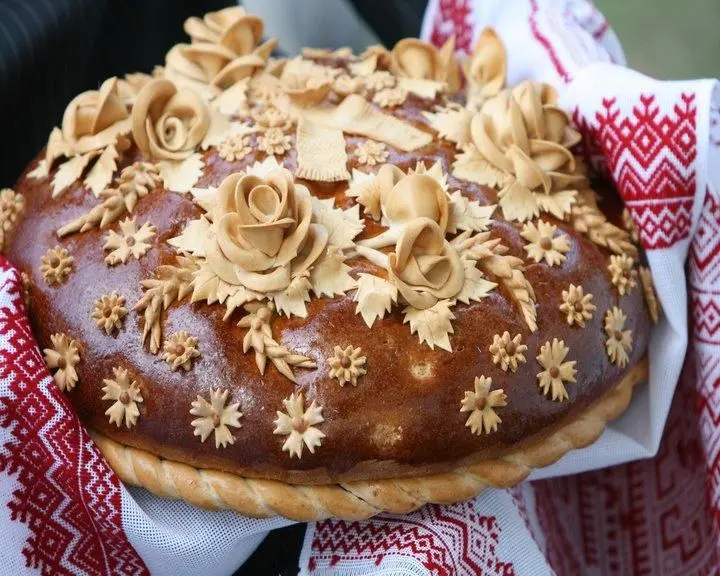
Korovay · Коровай
Korovay is a ceremonial bread usually prepared for weddings and decorated with various dough ornaments. The bread was traditionally prepared before wedding by women who sang traditional songs to guide them through the making. These women were called the korovainytsi , and had to match the standard of being in the long and happy marriage
Borshch · Борщ
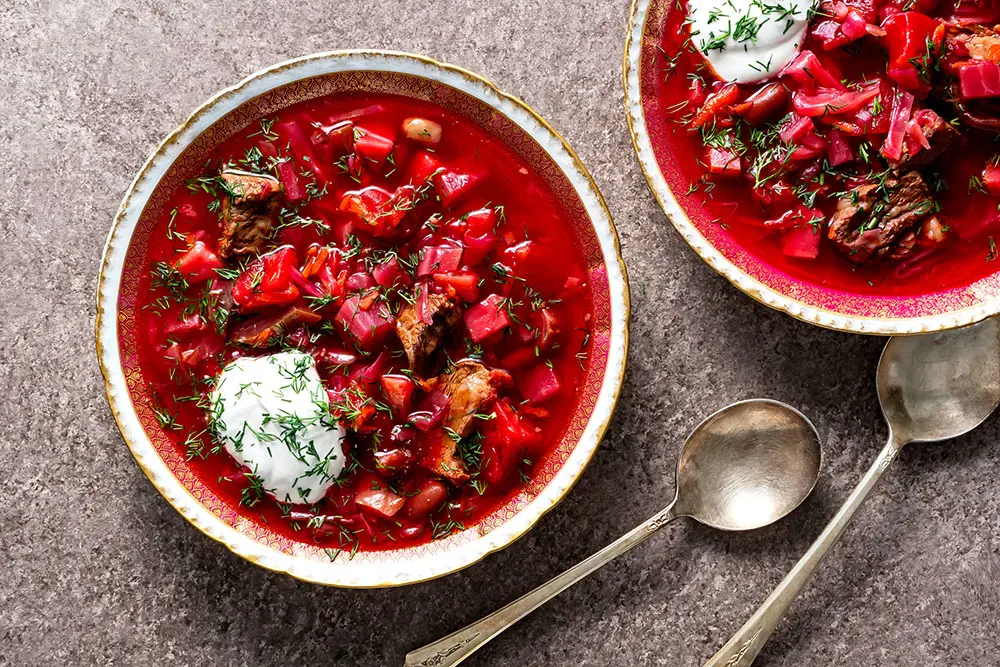
Borshch is a beetroot soup made with cabbage, potatoes and carrots and is usually served with sour cream. It is common across the country, therefore, the dish has numerous variations depending on the region of Ukraine. On July 1st, 2022, UNESCO included the practice of cooking borshch in the list of endangered intangible cultural heritage.
Kutya · Кутя
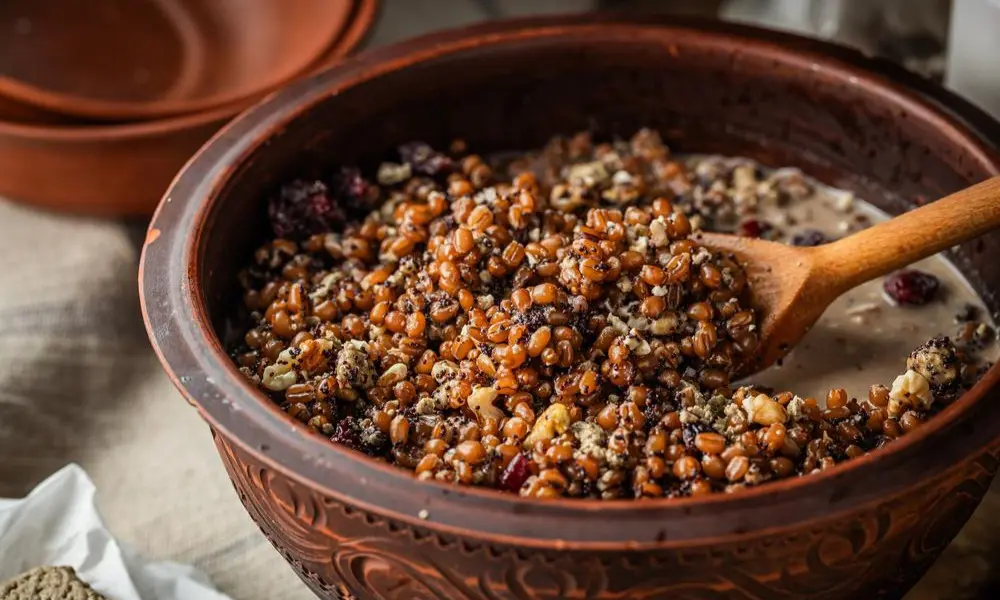
Kutya is a ceremonial dish, made with wheat, poppy seeds, nuts and dried fruits, which is a main dish for Christmas Eve. The ingredients of the dish vary depending on the region and family tradition. It is usually served with uzvar – a traditional drink prepared by boiling dried apples and fruits.
Paska · Паска
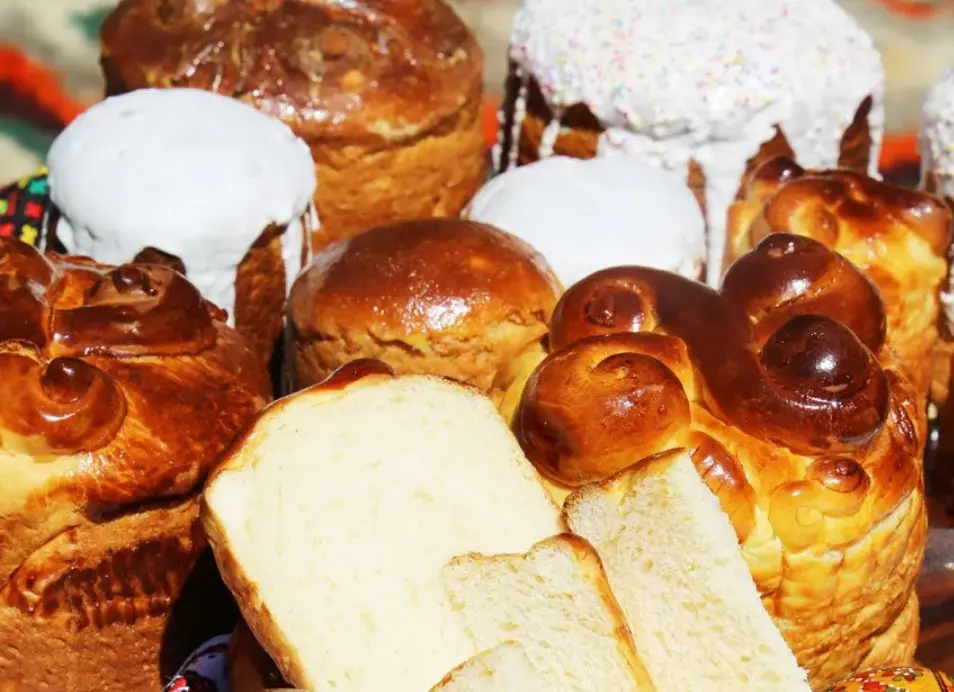
Paska is ceremonial bread rich in butter and eggs, baked for Easter. Depending on the region and family tradition, dried fruits can be added to the dough, and paska is decorated with dough ornaments or white icing. Traditionally, paskas are prepared Thursday before Easter Sunday and blessed at church together with other goods on Easter.
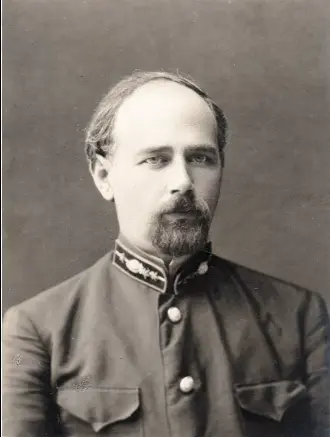
Mykola Leontovych
Mykola Leontovych was an outstanding Ukrainian composer, choral conductor, pedagogue, and public figure. His art is recognized worldwide for composing the popular and critically acclaimed Shchedryk (more known as The Carol of the Bells). Leontovych’s musical heritage consists primarily of more than 150 choral compositions inspired by the texts and melodies of Ukrainian folk songs.
Maria Prymachenko
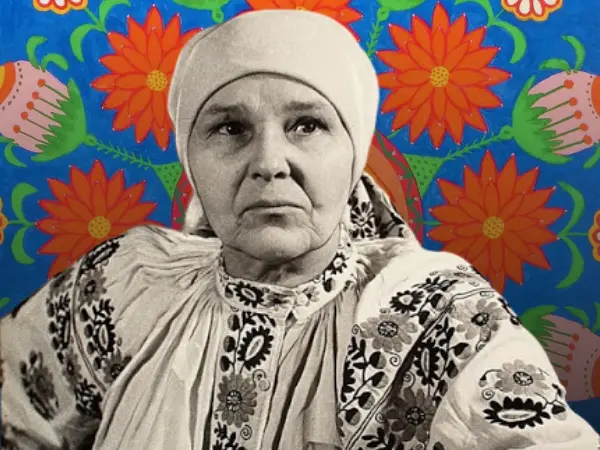
Maria Prymachenko was a self-taught folk artist known for her renderings of life in the Ukrainian countryside. Her gouache and watercolor works are vibrant and imaginative, filled with natural and everyday life motives. Prymachenko’s paintings are widely known throughout Ukraine and internationally: Pablo Picasso is said to comment on her works as “I bow down before the artistic miracle of this brilliant Ukrainian.”
Solomia Krushel’nyts’ka
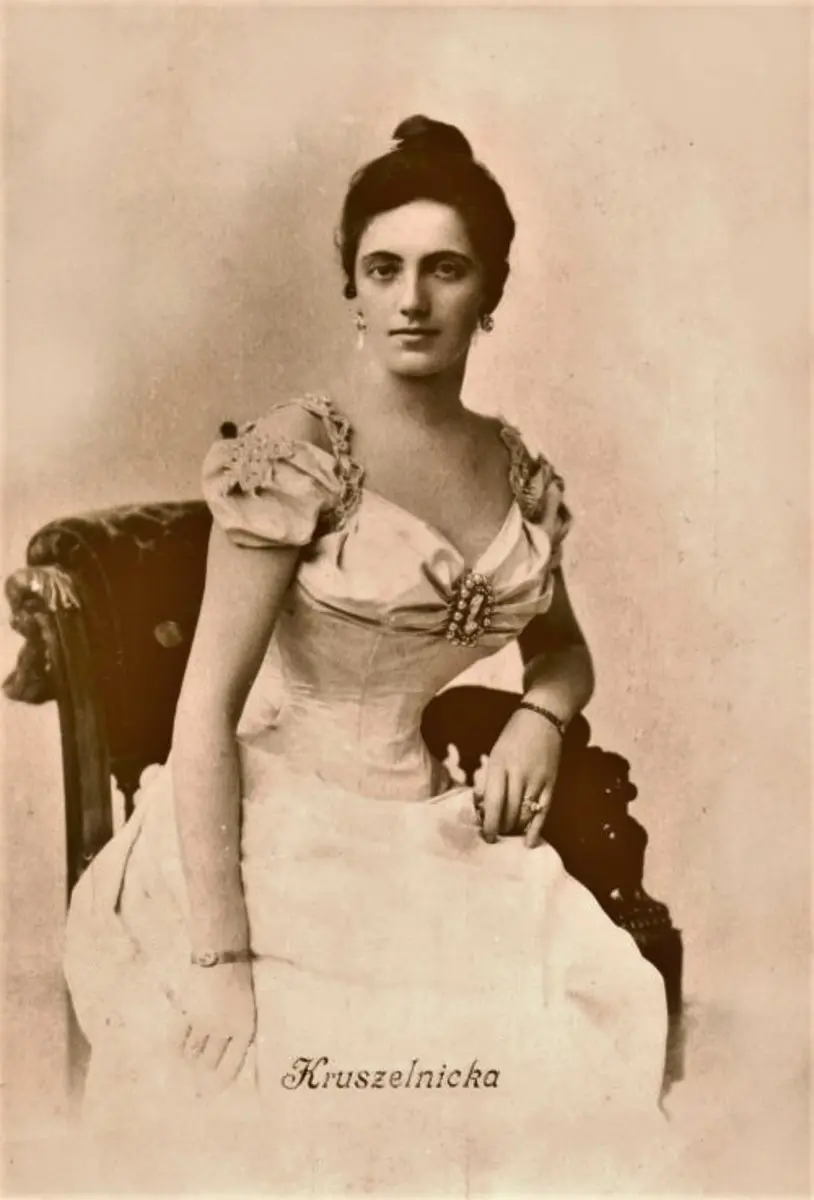
Solomia Krushel’nyts’ka is Ukrainian opera singer and pedagogue. Her incomparably beautiful lyrical-dramatic soprano with a range of almost three octaves is truly a unique phenomenon in opera and chamber art. She conquered the prestigious La Scala opera stage, and thanks to her immense popularity and talent, she was able to introduce Ukrainian song to the world.
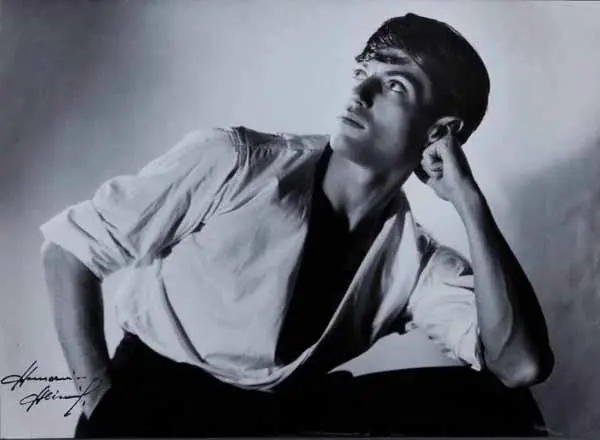
Serhiy (Serge) Lyfar
Serhiy (Serge) Lyfar was a Ukrainian dancer, choreographer, and ballet master of the Paris Opera Ballet. In total, Lifar staged more than 200 ballet performances, trained 11 French ballet stars, and was a founder of the neoclassical ballet genre. Serge Lifar remained foremost a Ukrainian to the end of his life. He refused French citizenship, saying “I am a Ukrainian and my homeland is Ukraine.”
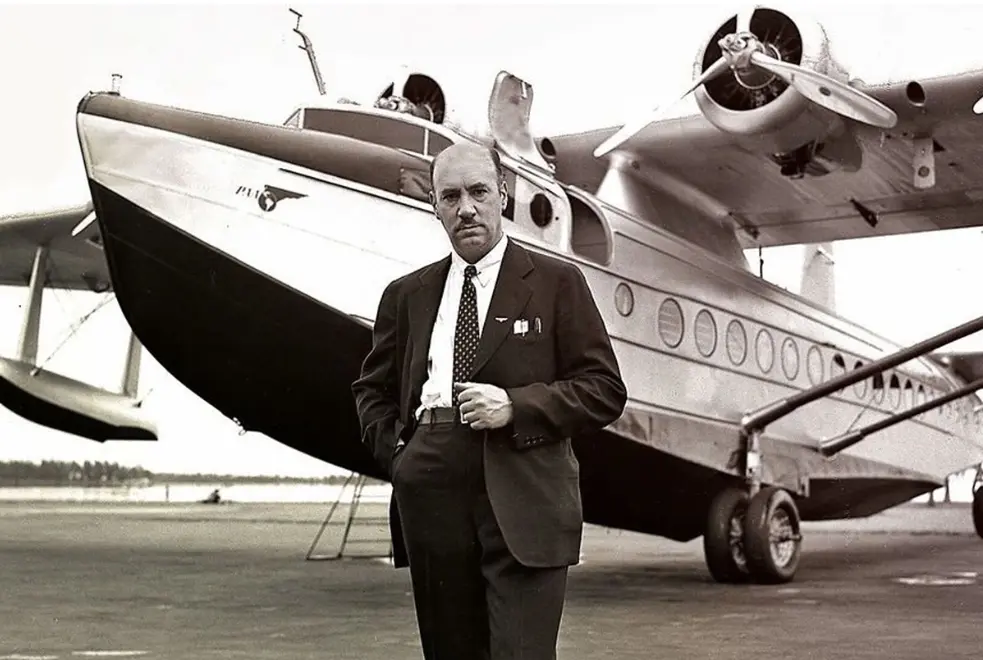
Ihor Sikorsky
Ihor Sikorsky is a world-famous Ukrainian engineer who opened the sky for millions of people. Amongst his inventions are first transcontinental passenger airplane, the first turbine helicopters, amphibious helicopters, first-ever aircrafts with multiple motors, and the four-motor passenger airplane. Igor Sikorsky will long be remembered as the man who gave the world its first practical helicopter.
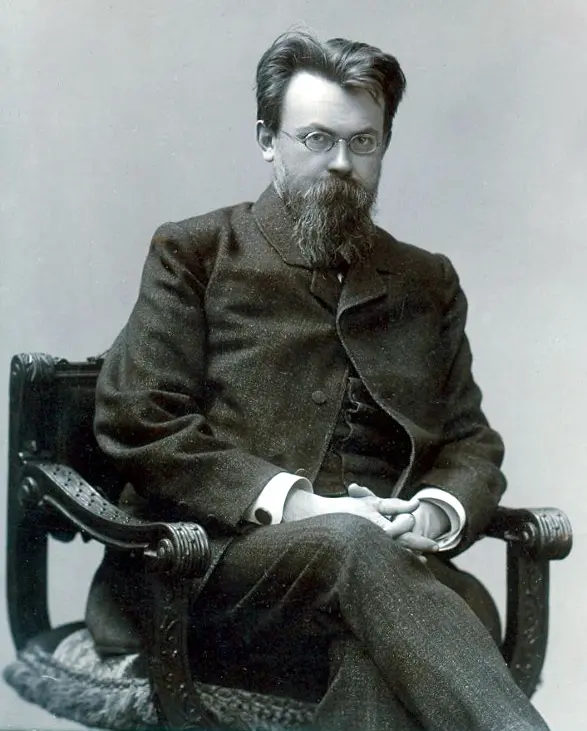
Volodymyr Vernadskyy
Volodymyr Vernadskyy was a scientist who was one of the founders of several modern branches of science, including biogeochemistry, genetic mineralogy, science knowledge, and ecology. He was also the first scientist to describe the concept of biosphere and noosphere. He also played a major role in the creation of the Ukrainian Academy of Sciences. As a tribute to this great scientist, the Ukrainian Antarctic station is named after Vernadskyy.
Ivan Puluy
Ivan Puluy was a Ukrainian inventor who developed his own cathode ray tube, known at the “Puluy Lamp,” which was capable of generating X-rays. It is believed that he developed X-rays before Roentgen. Aside from working as a physicist Dr. Ivan Puluy was also a public figure, a publicist, a translator, and a political scientist. As a translator, he worked on translation of the Gospels, New Testament and the Old Testament into Ukrainian.
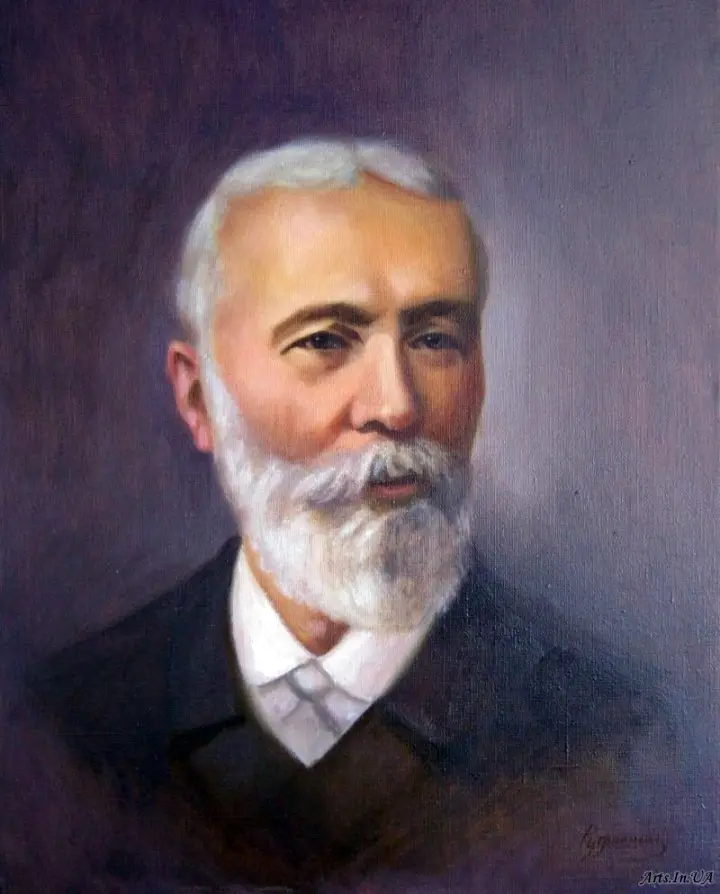
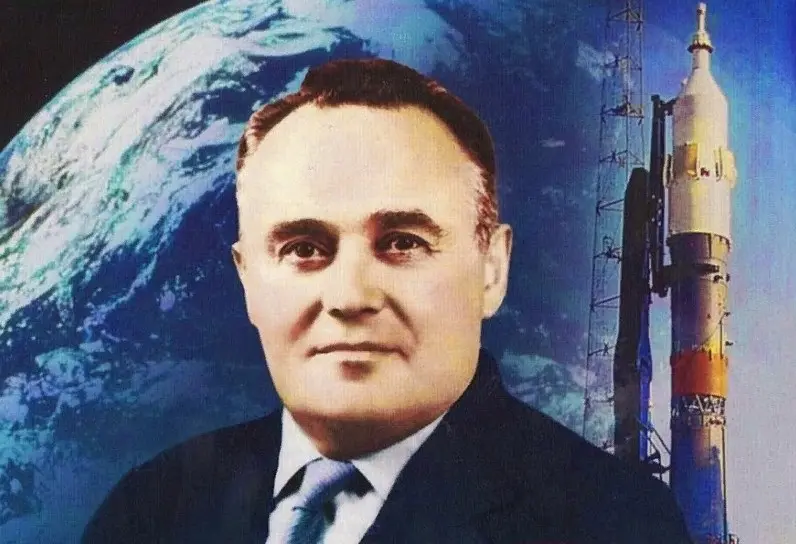
Serhiy Korolyov
Serhiy Korolyov is scientist and designer in the field of rocketry and astronautics, chief designer of the first rockets, artificial earth satellites, manned spacecraft, and the founder of the practical space industry. Korolyov never saw the completion of his largest project: just two weeks after Korolyov’s death, Luna 9 landed on the Moon. After the inventor passed away, in honour of his work a museum of space was built in his name.
Trypillia culture
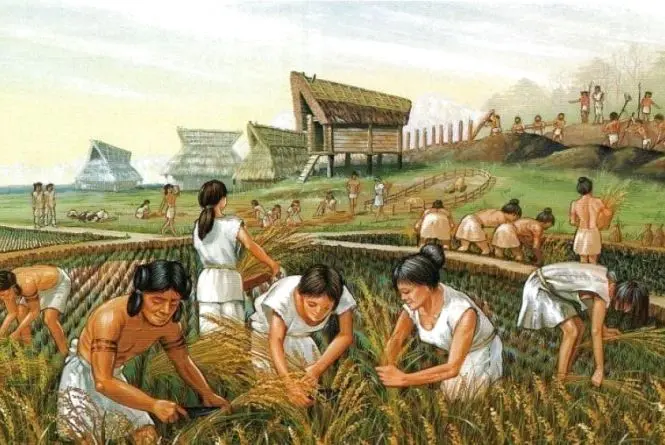
Trypillia Culture is an archaeological name for the Copper Age (around 7,000 years ago) civilization that existed on the territory of present-day Ukraine. The Trypillians built large mud-brick dwellings, cultivated the land, kept livestock, made working tools and created complex ceramics with geometric and spiral patterns. Trypillians are famous for their megasites — exceptionally large for this prehistoric epoch settlement, which extended over the area from 50 ha to 200 ha with around 10,000 inhabitants.
Scythian culture
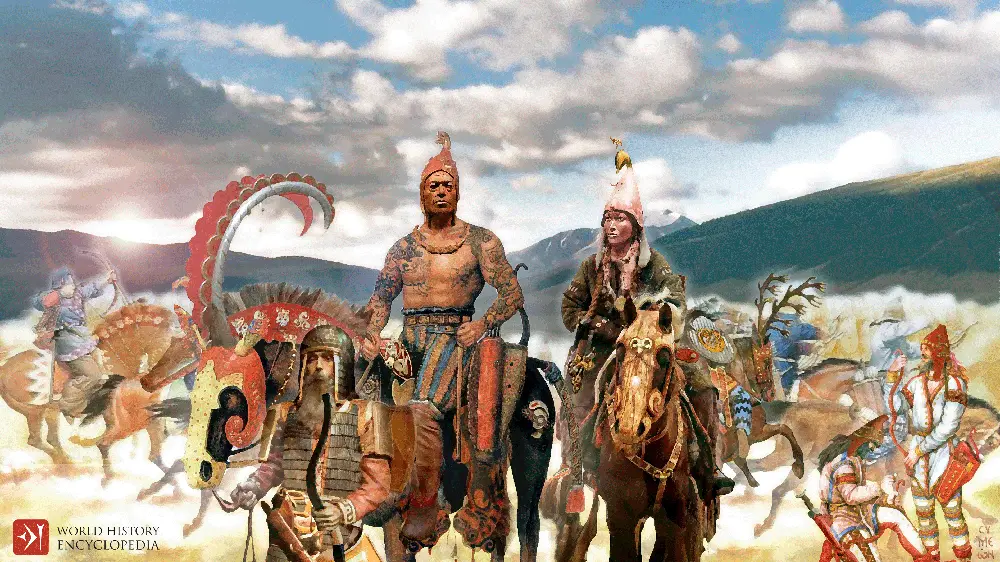
The Scythians are a tribe that controlled the steppe of Southern Ukraine in the 7th – 3rd centuries BC. The main type of Scythian activities was nomadic pastoralism – year-long keeping and breeding of sheep, horses and cattle. The Scythian kings wore signs of dignity and power, the most famous of which was a gold pectoral. After their rulers’ death, pyramids were built over their tomb, which could reach a height of 20 meters and are still present all around Ukraine.
Crimean tatars
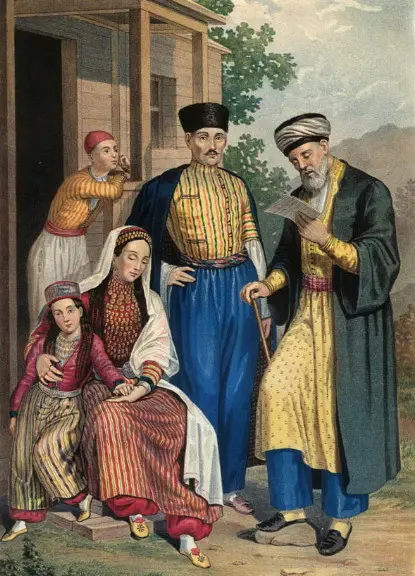
Crimean Tatars are indigenous people of Crimea, the Eastern European Turkic culture historically formed in the Crimean Peninsula. According to various estimates, approximately 300,000 Qırımlı (Crimean Tatars) live in Ukraine. The Crimean Tatars have a unique and multifaceted culture that includes folklore, ethnic music, decorative and applied arts, ritual ceremonies, traditional clothing and literature In 2016, Crimean tatar singer Jamala won the Eurovision contest with song “1944” in English and Crimean Tatar.
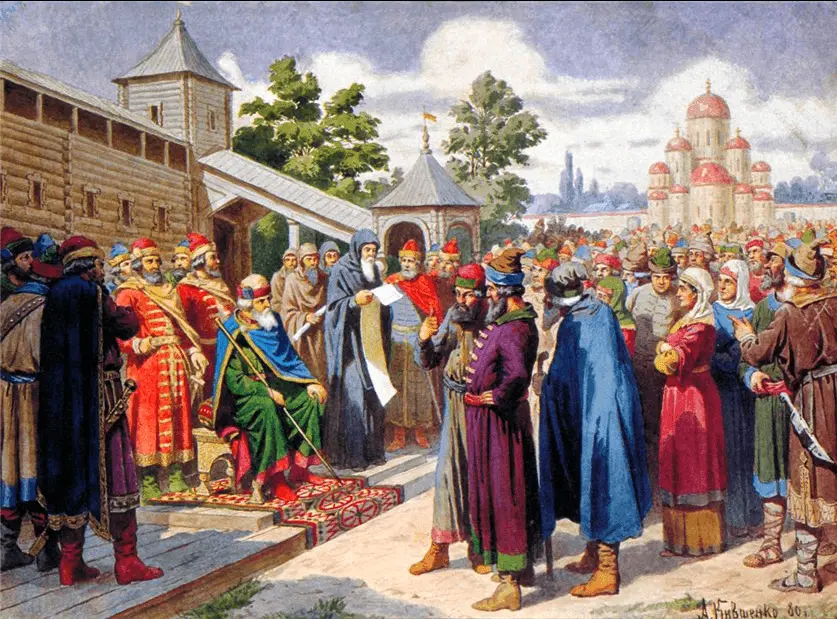
Kyivan Rus
From the late ninth to the middle of the thirteenth century, Kyivan Rus was one of the most advanced states in medieval Europe. The adoption Christianity in 988 had a lasting impact on religion, art, literacy, and architecture of Rus. Although the state declined due to internal fragmentation and the Mongol invasion, its political, cultural, and religious traditions formed the historical foundation of modern Ukraine and several other European countries.